LAST UPDATED: May 1st, 2015
Spring is hopefully arriving where you live and perhaps you’re like me; wanting to get a big game hunt done this spring. Personally, I love hunting bears where I live and chances are there are some bears in your neck of the woods as well. Not a lot of states offer over-the-counter spring bear hunting, but some do. If you have the resources and time, you might look into Canada (you’ll have to hire an outfitter) or head up to Alaska. You can spot and stalk them, bait them, and use hounds depending on the regulations of the ground you’re hunting. I love the state of Idaho for spring bear. Their tags are relatively cheap, and some units offer a second tag at a reduced rate. Baiting is allowed as long as you abide by the rules. The same goes with hounds or my favorite method….spot and stalk.
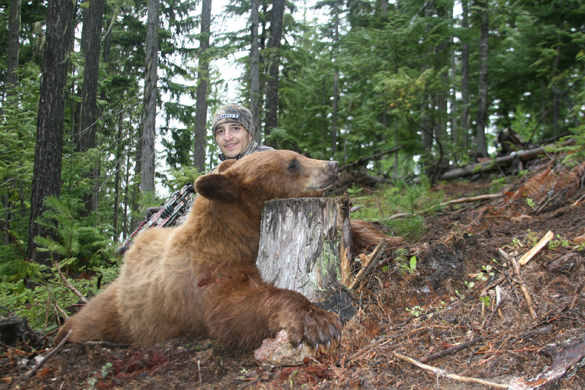
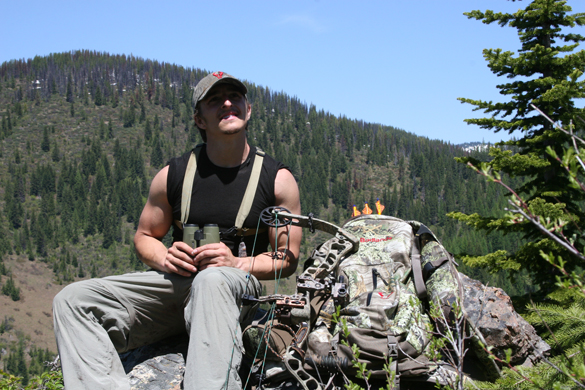
The author (shown here) understands the different methods used for bowhunting black bear yet chooses one of the toughest as his favorite.
DIY
When I first started hunting bears I planned a DIY hunt in Alaska off the Prince of Whales Island. My plan was to run a few baits, but mainly to spot and stalk. This trip was incredible because of the location and scenery, not to mention some of the biggest black bears in North America. This hunt meant more because it was up to me to take care of myself and harvest my own critter – on my own. I didn’t know much about tide tables or open water, but after a week I had fell in love with running baits off my skiff and glassing numerous beach fronts loaded in green grasses. This is one of the easiest hunts to plan and execute without a guide. Alaska doesn’t require you to hire a guide for black bears, but you will probably have to rent some gear and get dropped off via air taxi. I didn’t kill a bear on that trip, but I had enough action to make bear hunting my favorite way to enjoy the spring green up.

Guided bear hunts are pretty much a walk in the park as far as physical exertion goes (as long as someone else is baiting the stand sites). However, it offers perhaps the best odds for filling a tag.
Bear hunting ground in Idaho and the fitness perquisites for that journey are what I know best. However, if you’re going to hire a guide then the game will change. I have sat in a guided bear camp and it was about the easiest hunt I’ve ever been on. We were in the middle of the north fork of the Clearwater. We road in on ATV’s and sleds, and hung out at camp all day until evenings. We didn’t do any of the baiting, we just got dropped off and sat a few hours in the evening each day. I felt like I gained weight on the trip from the unhealthy menu options of camp and the lack of activity throughout the day. This is probably par for the course, unless you’re using hounds. If you’re going to tree a bear, be prepared to keep up with 4-legged dogs that can tame any mountain and negotiate dense bush and tangled terrain. Hound hunting is physical, and you better be in shape if you want to keep that bear at bay long enough to earn a shot.
Baiting
Baiting bears DIY style is a ton of fun but it is also hard work. Usually we start baiting mid April and can end up running baits into June. We bait two times a week and drive over a 100 miles one way – it’s a commitment. Hauling in bait and getting away from roads and easy access is how you find a mature boar. The harder an area is to reach, usually the higher quality of bears you will find. When you have a 50gallon barrel to put on your back, plus grease and grub, and a cooking stove, you know you’re in for a great workout. An ATV can only get you so far, so be prepared to make several trips just to bait and set-up your stands and ladders. You might be hauling in a chainsaw as well to create shooting lanes and help guide the bears’ approach to your bait.

If baiting is legal in your area remember…bears love sweets!
You have to find country that has cover, a water source nearby and somehow a way to get the wind to cooperate when you sit the stand. Either way, it takes a couple of seasons to really perfect your set-ups and find areas where big bears want to reside. We don’t burn vacation time to hunt bears, so a snapshot of our weekly routine mid bear season when baiting goes like this:
Wednesday – get off work and drive straight to Idaho. We find discount bread stores on the way and load up on pastries – like literally a truckload. By the time we get to our destination, we unload the ATV, tie down the stove and buckets of bait and ride off in the fading light. Once we get to where we are going, hike in and cook up some grease and smoke out the surrounding area. You’ll know immediately if your bait is getting hit, usually it takes a few days for the bears to find it. I strongly recommend putting out some scents in the area and utilizing a trail camera that can be locked up from curious bears.
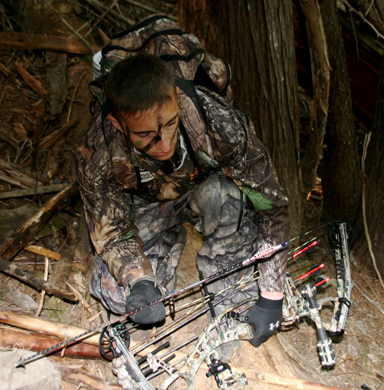
Baiting black bears yourself is hard work but the payoff is well worth it.
Some folks put little honey dishes five or six feet off the ground against a tree so the bears have to stand up to get into them. If your camera can get pictures or video you should be able to tell if you have a male for female and get solid intelligence on the bear’s size. Once you’ve baited in the dark, head back to the truck and bomb run home so you don’t miss work. Remember, we save our vacation time for the fall.
Friday Night – we do the same program, bait in the dark, pull cards out of the cameras, and head back to base camp. We usually hunt bears in the morning and evenings leaving the entire day to scout for bear sign, glass ridges, and explore old abandoned logging roads with fresh grass. If you can do this weekend after weekend you will get your opportunity. It’s a school of hard knocks so be prepared to cut your teeth on a steep learning curve. Now, let’s talk more about finding bears on their feet for spot and stalk opportunity.
Spot And Stalk
If you want to shoot a bear off of the ground it takes a special mindset. You need country to pore over and you may have to sit in one spot and glass and grid repeatedly until a bear materializes. Bears can pop-out of nowhere at any given time so you’re best to glass areas where you are seeing green grass and tons of bear scat. I have found a few magical abandoned logging roads that produce bear encounters every year. These places in Idaho usually are behind locked gates that require a five to ten mile mountain bike ride. Logging outfits are notorious for seeding the roads when they’re done logging and this makes for prime bear areas – especially when you have a mixture of cover and a water source.
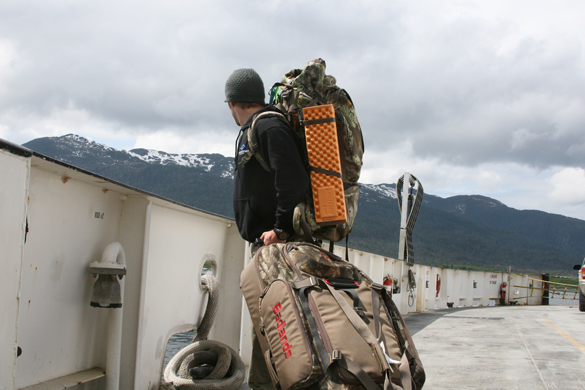

A DIY bear hunting trip can be very adventurous and cost less than half of what a guided hunt will cost. Best of all, you have the satisfaction of knowing you did it all yourself.
I’ve found bears pretty easy to sneak on, however I’ve found them much more difficult to locate. You can only stalk a bear when you have it located so be prepared for long sessions of glassing and many miles on your boots, ATV, or mountain bike. Everything I’ve described up to this point is going to require some fitness – hauling heavy buckets of bait, hiking with a big barrel on your back, and hanging stands is a sweat equity endeavor. When you punch your tag on a spring bruin, you have the labor of getting that carcass out of the woods and securing your bear meat. This too is arduous so my point is that you better be doing a compellation of strength and conditioning prior to the season. Most bowhunters I know spend a lot of time on the spring weekends shooting 3D tournaments with field points, I personally would rather be hunting in the mountains away from people with sharp broadheads – on my own.
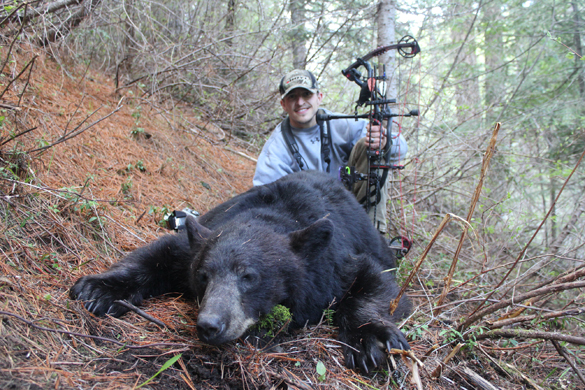
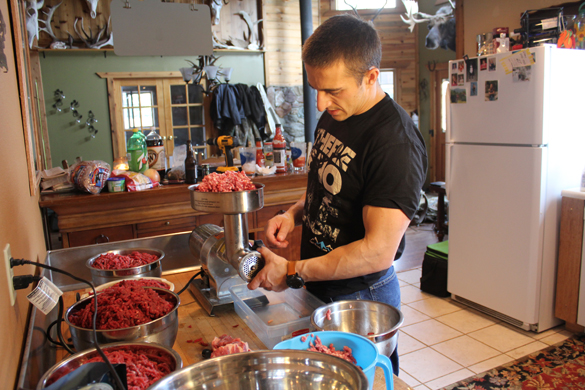
Spring isn’t just for turkey hunting. Black bears offer some of the most exciting action found in the spring woods…not to mention the meat isn’t too bad either!
Dan’s Tips for Spring Bear
• Use a Trail Camera with a Lock Box to keep intelligence on bears and trophy quality.
• Study the bear tracks left behind, this will help decipher maturity and if cubs are present.
• Read through the Regulations so you know all the rules that govern each state.
• Bear meat can be great table fare, treat the meat well when removing from the field.
• I only use fixed broadheads on bears, I don’t encourage mechanicals.
• Watch out for smart bears that circle your baits, they can detect your presence so have shooting lanes surrounding your bait site.